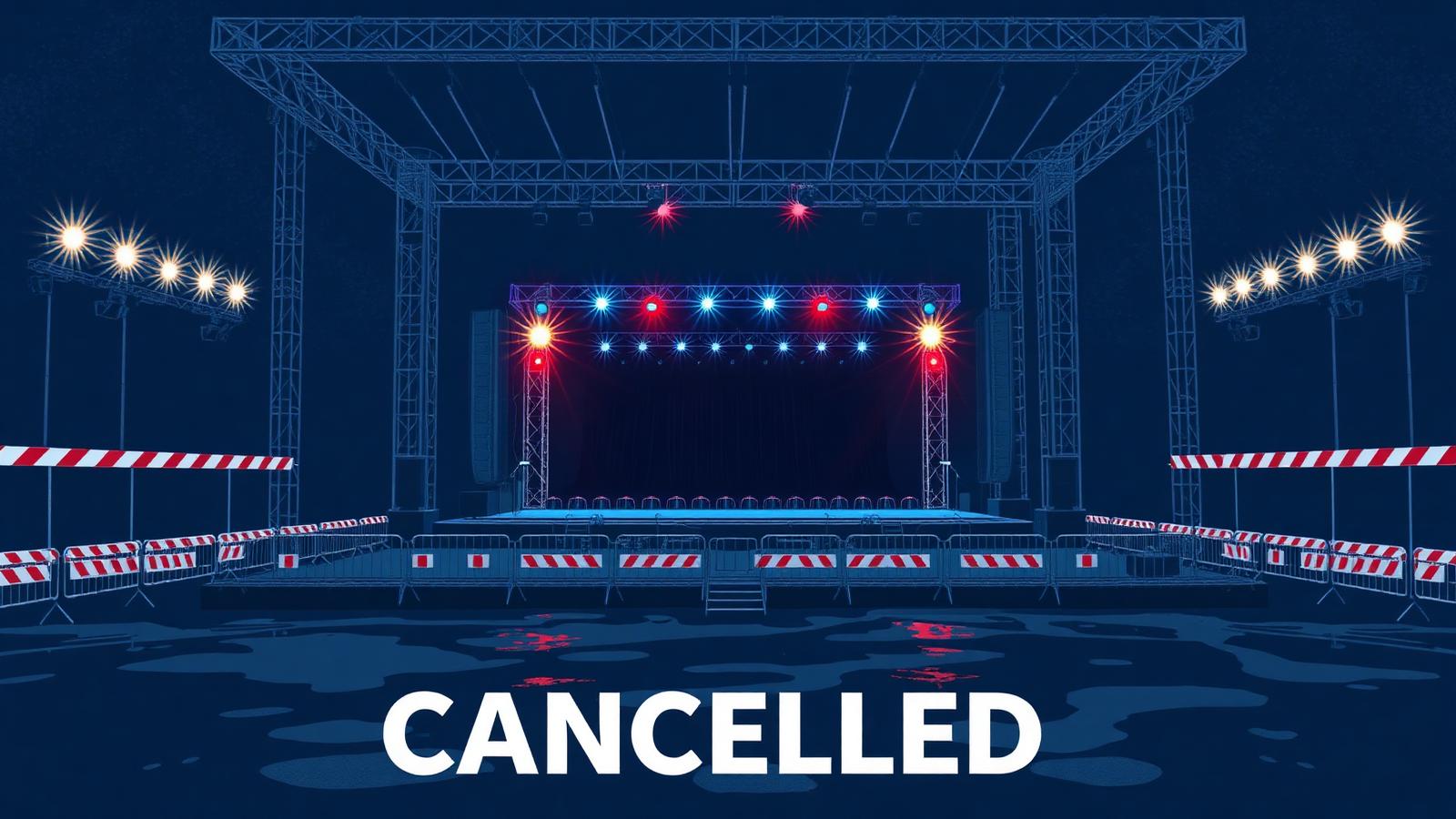
ShattaFest UK Cancelled: Police Shut Down a Sold-Out London Party
Police called off ShattaFest UK at Copthall Playing Fields after the site went over its approved capacity and a crush developed. Here are the highlights, the good and the bad.
A sold-out Ghanaian party in North London ended before the headline set. On Saturday, 1 August 2026, ShattaFest UK — staged at Copthall Playing Fields, London NW4 as part of the Ghana Party in the Park weekend — was cancelled after police shut the event down over overcrowding, with reports of a stampede at the gates as the site passed its approved capacity.
The highlights
- What happened: UK police called the festival off after the venue reportedly exceeded its licensed capacity, intervening on public-safety grounds following a crush incident.
- Organisers' statement: Ghana Party in the Park confirmed a "major incident at the festival site," said the event was "temporarily paused," and asked patrons not to travel to the site while emergency services worked.
- The bill: Unlike previous editions, the London show was built almost entirely around Shatta Wale's name and brand — the draw, and the pressure, sat on one artiste.
- The demand: Tickets had sold out days early (£30 general admission, £60 VIP), with the event pitched at well over 10,000 fans.
- Still unclear: refunds, a reschedule date, and whether any injuries or arrests were recorded.
The good
1. The pull is real. A Ghanaian dancehall brand sold out an outdoor London festival on one name. That is diaspora market power, and it is not an accident — it is years of fan-building.
2. Nobody waited for a tragedy. Police and stewards stopped the event while the problem was still crowd pressure, not a body count. Shutting down a sold-out show is the expensive decision; it was also the right one.
3. The comms were fast and clear. "Do not travel to the site" is exactly the message a paused festival needs to push, and it went out while the situation was live rather than after the fact.
4. The template exists. Ghana Party in the Park has run for years. This is a fixable operations failure inside a working brand, not proof that the culture cannot fill a UK field.
The bad
1. Capacity is a plan, not a guess. Going over an approved figure means either oversold access, weak gate control, or crowd flow that funnelled too many people into one point at one time. All three are preventable on paper months earlier.
2. Single-headliner risk. When one artiste is the entire reason to attend, arrival times bunch and the crowd surges instead of spreading across a day of acts.
3. Fans paid twice. Flights, trains, childcare, outfits, hours in a queue — and then a gate that closed. Refund silence on the night turns disappointment into distrust.
4. Reputational tax on the next one. Licensing authorities remember shutdowns. The next Ghanaian festival applying for a London site inherits this file, deserved or not.
What ticket holders should do now
- Keep everything — booking confirmation, Eventbrite order number, card statement, travel receipts.
- Wait for the organiser's official refund route before filing anything; a cancelled event usually triggers an automated refund to the original payment method.
- If no route appears within a reasonable window, ask your card issuer about a chargeback or your bank about Section 75 (for eligible credit purchases).
- Ignore DM "refund agents" and resale links. Cancellation days are harvest days for scammers.
The lesson
Afrobeats and dancehall have outgrown improvisation abroad. The music can fill the field; the operation has to be able to hold it. Timed entry, honest capacity counts, multiple gates, a support bill that spreads arrivals, and a refund policy published before the gates open — that is what turns a sold-out weekend into a legacy instead of a headline.
This story is developing. Details on injuries, arrests, refunds and a possible reschedule had not been confirmed at the time of writing.
AI narration costs 1 coin and goes straight to the writer. One-time — replay any time.
Reader comments
Related stories

How a Crowd Crush Happens — And Why Capacity Numbers Are Not Bureaucracy
A plain-language explainer on crowd density, gate funnels and why a festival can be perfectly safe at 10,000 and dangerous at 11,000.

Before the Split: Where P-Square's Trouble Actually Began
Two brothers, one brand and a business that never separated the boardroom from the family living room. A look at the origins of the P-Square trouble.
The Split, Step by Step: What Led P-Square to Break Up
Management fights, public statements, cancelled shows and two solo careers. A sequenced look at how the P-Square breakup actually unfolded.